Match capacity to real working radius
Published maximums are rarely the governing number. Pensacola projects often place loads onto decks, mezzanines, or scaffold bays. Confirm:
- Load weight on the forks plus rigging or attachments
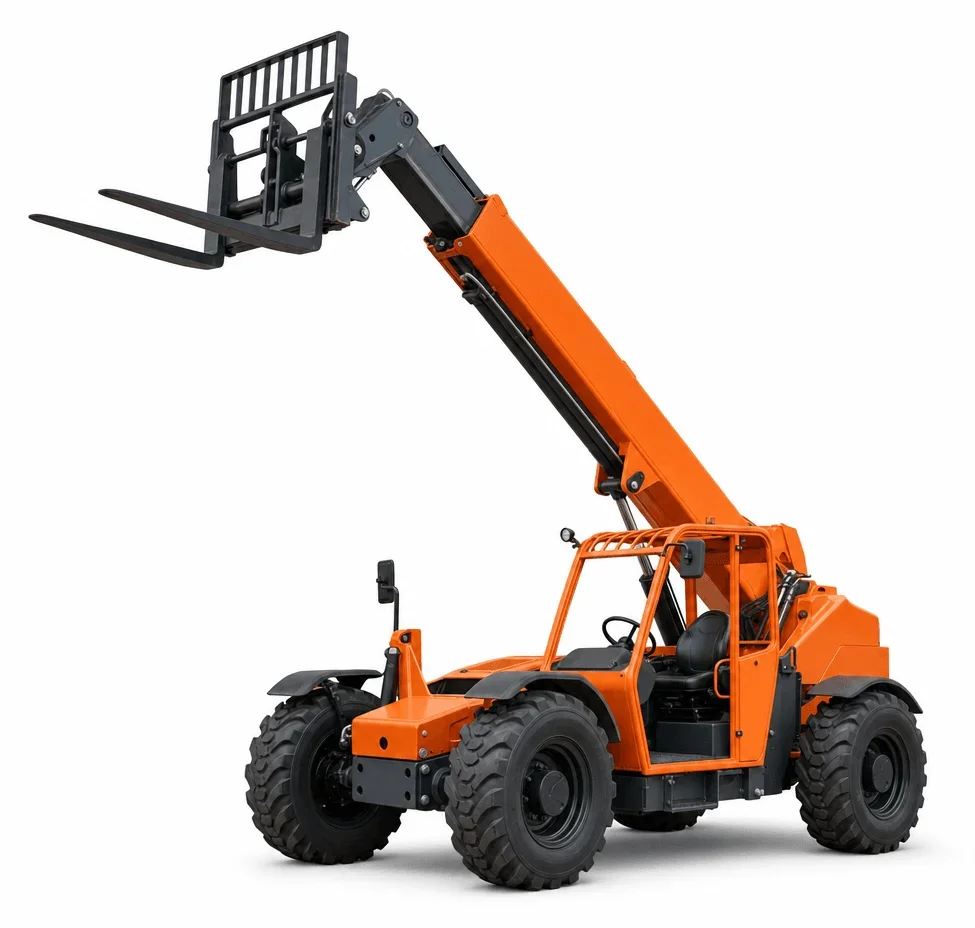
- Boom angle and extension where the load will actually land
- Stabilizer or frame-leveling requirements per the chart
If most placement is near the ground, a compact unit may be sufficient. Long reaches to upper levels call for higher-capacity models with conservative margins.
Ground and weather factors around Pensacola
- Sandy or shell base: Four-wheel drive and wide, rough-terrain tires help maintain flotation from laydown yards to the structure. Narrow access between trades or containers may limit chassis width.
- Salt and humidity: Coastal air can affect exposed hydraulics and electricals. Machines designated for marine-adjacent work typically feature enhanced protection.
- Storm aftermath: After heavy rain, expect pooled water, ruts, and debris. Actual site conditions, the selected unit’s instructions, and site procedures determine whether lifts proceed.
Carriage and attachment considerations
- Standard pallet forks for unitized loads
- Swing or sideshift carriages for aligning to tight landings
- Tilting carriages for sloped approaches or uneven laydown points
Confirm that any attachment is accounted for in the load chart and transport plan.
Access and logistics
- Measure gate openings, turn radii, and overhead obstructions along the travel path
- Verify staging area dimensions for trucks, containers, and stockpiles
- Coordinate with other lifting equipment to avoid conflict zones
Related categories for elevated access or storage: - /forklift-rental/ - /storage-containers-rental/ - /temporary-fencing-barricades-rental/