Site layout and load profile
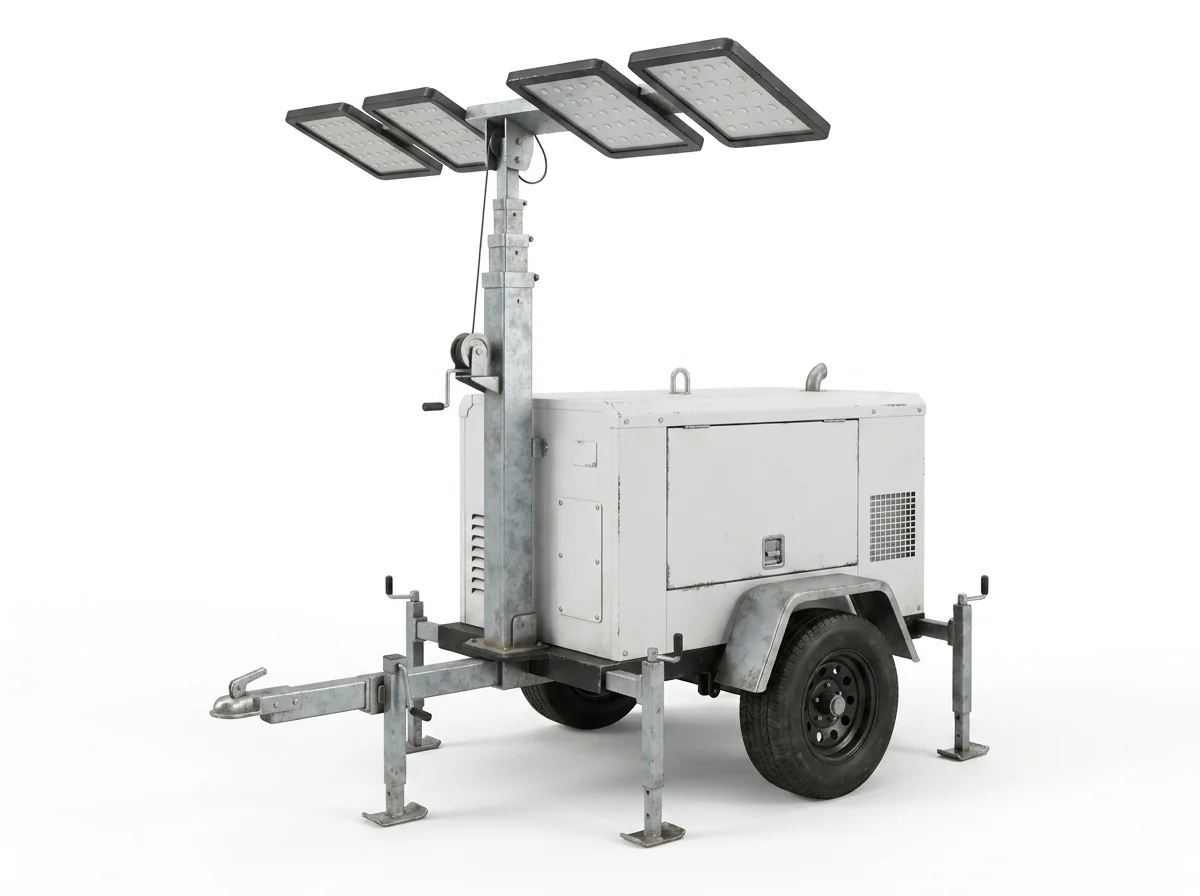
Begin with the longest cable run and the tightest turn into the placement spot. If the unit must stay outside a facility while serving interior loads, note the door threshold, ramp grade, and any cable protection needed at crossings. For light towers, check whether the mast can sit below the task line without creating glare or blocked egress.
Key constraints to document: - Peak and continuous amperage or lumen targets by zone - Distance from unit to panels, temporary boards, or staging - Overhead clearance for mast raise and sway room - Turning radius from street to pad, especially near sandy shoulders
Coastal effects on equipment choice
The regional climate brings high humidity, salt-laden air, and frequent heavy rain. That environment favors sealed electrical connections, galvanized or coated frames, and enclosures that shed wind-driven water. On unpaved lots or post-storm surfaces, a wider track and robust leveling outriggers help keep towers stable and generators serviceable. For long outdoor duty cycles, weatherized diesel or hybrid sets often handle exposure better than open-case units. Indoors near sensitive operations, compact electric-light packages and low-emission power sources reduce exhaust and noise.
Power and lighting within mixed industries
Healthcare interiors often require consistent, flicker-free lighting for maintenance windows and quiet power for temporary HVAC or tools. Aviation and defense hangars need higher mast heights, broad beam spread, and cable plans that keep aprons and taxi paths clear. Industrial sites around Pensacola may split loads between exterior work yards and interior work bays; plan for separate circuits or staged towers to avoid shadow bands and voltage drop.
Surface and route in storm season
After heavy rain, expect saturated sand and debris along access routes. A rough-terrain tow vehicle and four-point stabilization help position towers around structural assessments. Where mechanical access is also needed for elevated tasks, coordinate with aerial units so masts and booms do not conflict. See related options at /rough-terrain-scissor-lift-rental/, /boom-lift-rental/, and /aerial-lift-rental/.
What to measure before you call
- Placement pad size, grade, and soil firmness
- Cable or light throw distance and any door or curb transitions
- Indoor noise and emissions tolerance
- Expected weather exposure window and salt spray proximity
Actual conditions, the selected unit’s instructions, and site procedures govern setup and use.